
Coating Solutions for TPO or PVC
Choose a surface. Pick a coating. Send your project.
- Roof or deck
- Coating
- DocumentsOptional
- Project
TPO / PVC
Step 2 of 4
Which coating would you like?
Choose an option. Our team will confirm the right system for your project.
Not sure? Call 408.280.7733 and we’ll help.
Read the full TPO / PVC coating guide
Coating Solutions for TPO or PVC
TPO and PVC are single-ply membranes with different preparation requirements. Use TPO Primer only on qualified, weathered TPO. Acrylic Clear Base is the recommended primer path for PVC membranes. Confirm the exact membrane before choosing a coating path.
- Surface
- TPO / PVC
- Coating choices
- Acrylic + silicone
- Check the roof
- Condition · moisture · adhesion
- Files included
- Specifications · data · safety · drawings
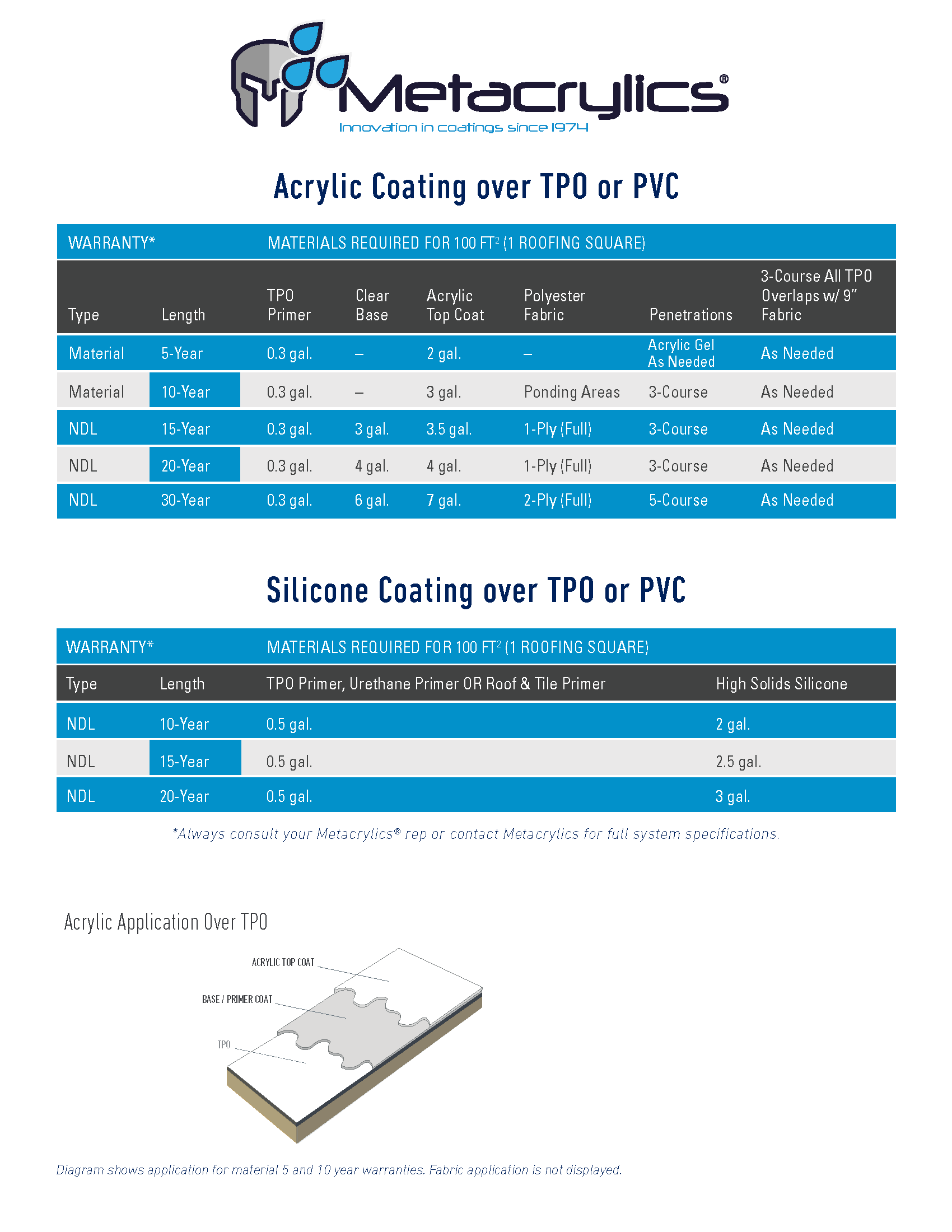
Acrylic steps
The published silicone assembly shown is for TPO. Send PVC projects to the technical team for project-specific confirmation before material selection.
Follow the current written specification for preparation, coverage, film thickness, and installation.
Preparation guidance for your installer
Common roof concerns
- Open heat-welded seams or aged repairs
- Chalking, contamination, or incompatible prior coatings
- Movement around curbs, drains, and terminations
Field preparation
- Identify TPO versus PVC before selecting primer
- Deep-clean until rinse water runs clear
- Use TPO Primer only on qualified TPO; use Acrylic Clear Base for PVC and verify adhesion
Release checkpoints
- All seams pass a probe test
- The primer matches the identified membrane
- Representative adhesion tests are accepted
Need an estimate or more detail?
Use these resources when you need more detail, then return to the project steps.
Answers before the roof brief.
Use these answers for planning, then follow the current written specification for the project.
Can an existing TPO / PVC roof be coated?+
A TPO / PVC roof may qualify when the assembly is identified, sound, dry, repairable, properly prepared, and proven compatible through project-specific testing. Wet or unsound areas must be addressed before coating.
What preparation does Coating Solutions for TPO or PVC require?+
Preparation depends on the exact substrate and condition. Inspection, moisture review, cleaning, drying, repairs, detail work, and representative adhesion testing come before the final primer and coating sequence.
How is the material quantity calculated?+
The estimator uses measured roof area, detail length, system family, planning term, and a waste or texture allowance. Actual ordering must follow current coverage rates, specified film build, surface profile, and field verification.
Which technical documents belong in the project file?+
Start with the system specification, then include the current product data, safety data, applicable detail drawings, approvals, warranty requirements, and any written project-specific instructions.
When should the technical team review the roof?+
Request a review whenever the substrate is uncertain, moisture or drainage is a concern, adhesion results vary, prior coatings are present, warranty coverage is planned, or field conditions differ from the published system.