
Coating Solutions for Spray Polyurethane Foam
Review surface preparation, coating products, and application specifications. Send your project for review.
- Roof or deck
- Coating
- DocumentsOptional
- Project
Spray foam
Step 2 of 4
Which coating would you like?
Choose an option. Our team will confirm the right system for your project.
Not sure? Call 408.280.7733 and we’ll help.
Sprayed Polyurethane Foam Roofs
For SPF that has weathered but can be repaired and returned to service without replacing the entire foam system.
Do not apply primer over an existing silicone surface. Existing acrylic-coated foam may require primer after inspection and adhesion testing.
Read preparation and application guidance ↓What to bring to the review
Roof area, location, existing membrane or coating, photos of the field and details, leak locations, and known moisture or drainage concerns help the team review the project.
Estimate materials for this surface →Read the full Spray Polyurethane Foam coating guide
Coating Solutions for Spray Polyurethane Foam
SPF roofs break down from UV weathering and need recoating to survive. Metacrylics coatings provide excellent resistance to weathering and ponding conditions, extending the life of the foam beneath.
- Surface
- Spray Polyurethane Foam
- Coating choices
- Acrylic + silicone
- Check the roof
- Condition · moisture · adhesion
- Files included
- Specifications · data · safety · drawings
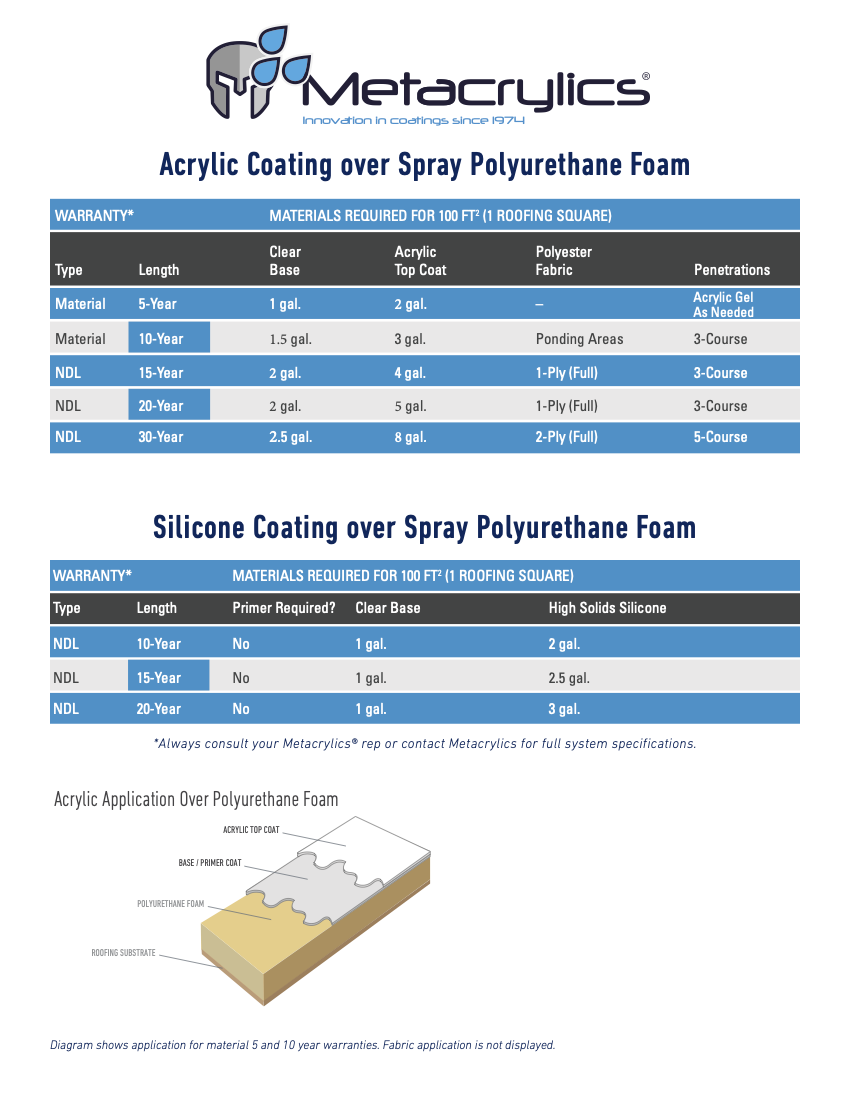
Acrylic steps
Do not apply primer over an existing silicone surface. Existing acrylic-coated foam may require primer after inspection and adhesion testing.
Follow the current written specification for preparation, coverage, film thickness, and installation.
Preparation guidance for your installer
Common roof concerns
- UV-eroded or exposed foam cells
- Bird damage and punctures
- Wet or poorly bonded foam
Field preparation
- Remove and replace wet or unsound foam
- Shape repairs to drain without hard edges
- Clean, dry, and detail all penetrations
Release checkpoints
- No friable foam remains
- Repairs are compatible and fully cured
- Coating film is continuous across transitions
Need an estimate or more detail?
Use these resources when you need more detail, then return to the project steps.
Answers before the roof brief.
Use these answers for planning, then follow the current written specification for the project.
Can an existing Spray Polyurethane Foam roof be coated?+
A Spray Polyurethane Foam roof may qualify when the assembly is identified, sound, dry, repairable, properly prepared, and proven compatible through project-specific testing. Wet or unsound areas must be addressed before coating.
What preparation does Coating Solutions for Spray Polyurethane Foam require?+
Remove and replace wet or unsound foam. Shape repairs to drain without hard edges. Clean, dry, and detail all penetrations. Confirm the selected acrylic or silicone specification before application; preparation varies with the existing surface and field conditions.
How is the material quantity calculated?+
The estimator uses measured roof area, detail length, system family, planning term, and a waste or texture allowance. Actual ordering must follow current coverage rates, specified film build, surface profile, and field verification.
Which technical documents belong in the project file?+
Start with the system specification, then include the current product data, safety data, applicable detail drawings, approvals, warranty requirements, and any written project-specific instructions.
When should the technical team review the roof?+
Request a review whenever the substrate is uncertain, moisture or drainage is a concern, adhesion results vary, prior coatings are present, warranty coverage is planned, or field conditions differ from the published system.